Our production process
Ghidoni’s mechanical machining production cycle includes a series of fundamental steps to ensure reliable precision mechanical components. Each step, from design to shipping, is designed to optimize time and quality, reducing waste and rework. This methodical approach allows us to meet the needs of customers in the automotive, biomedical, packaging, and machine tool industries, maintaining high standards at every stage of production. In addition, careful planning of each process allows us to adapt quickly to special or urgent requests without compromising quality.
Order receipt and prototype design
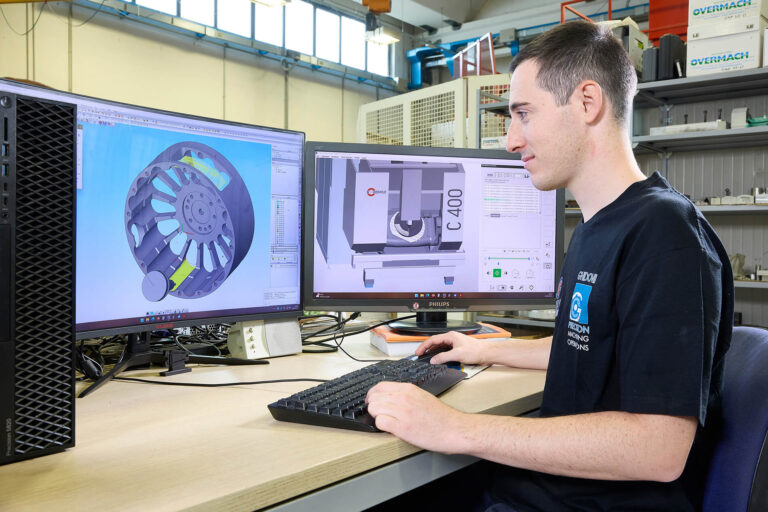
The process begins with receiving the order and analyzing the customer’s technical specifications. Next, we move on to the design and construction of the mechanical prototype, using advanced CAD/CAM software that allows for virtual simulations and tool path optimization. This phase allows us to verify geometries, materials, and functionality before proceeding to production, reducing errors and optimizing the timing of mechanical processing for third parties. Prototyping also allows us to test any design changes, anticipating problems that could arise in production.
Choice of materials and preparation
The selection of materials is crucial for the quality of precision mechanical components. Steel, aluminum, stainless steel, and special alloys are chosen based on the project requirements and the characteristics requested by the customer. The preparation of materials and the configuration of machines, from turning centers to 3-5 axis milling centers, ensure that high-precision machining can begin in complete safety and efficiency. Choosing the right materials affects not only the strength and durability of the component, but also the precision of subsequent machining processes.
CNC machining process
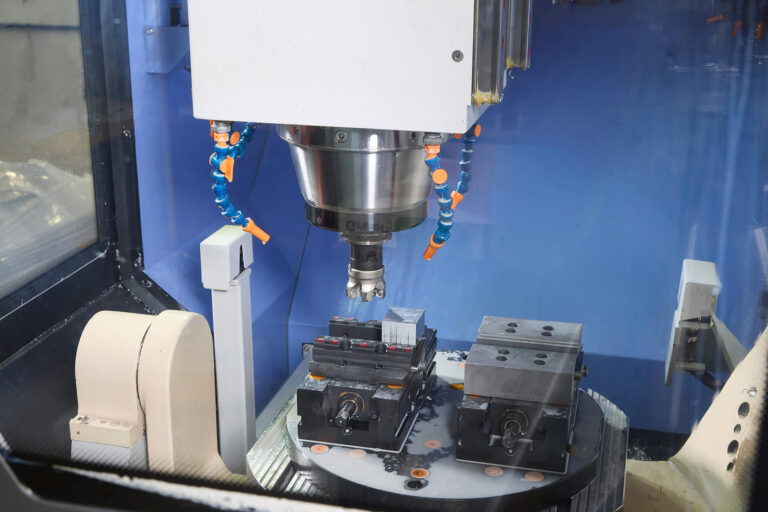
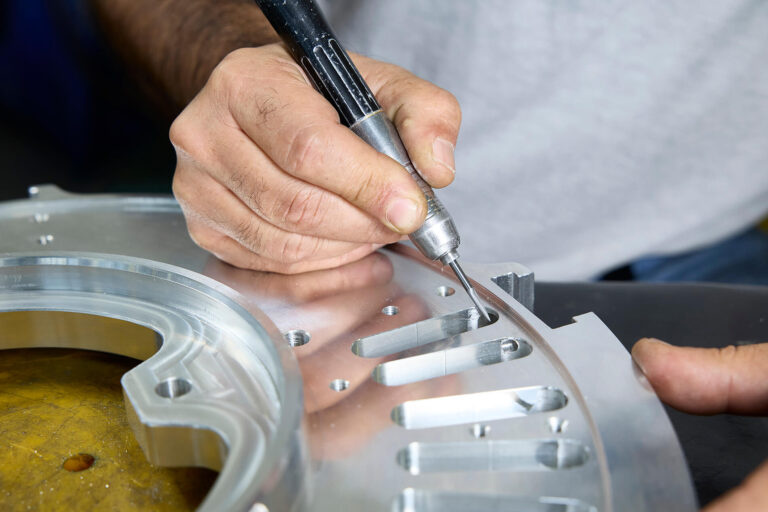
The turning, milling, boring, and grinding phases are at the heart of production. The use of HAAS vertical machining centers, horizontal machining centers, and multi-axis CNC lathes allows us to achieve complex geometries with tight tolerances and extremely precise details. The integration of manual finishing of burrs and profiles completes the machining process, improving the surface quality of the parts and ensuring compliance with technical requirements. In addition, continuous machine monitoring and periodic tool calibration ensure repeatable and consistent results on every production batch.
Finishing, grinding, and final testing
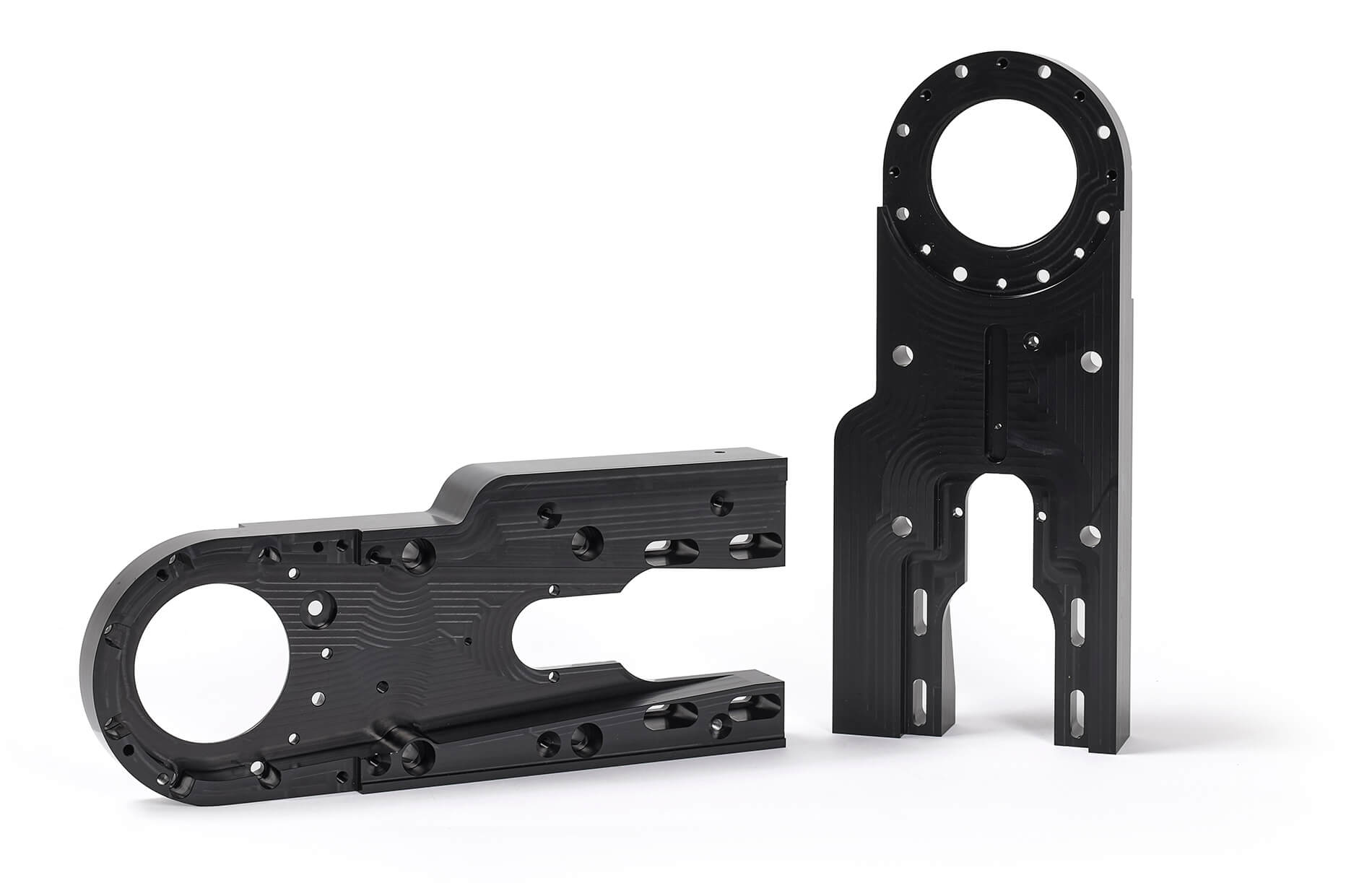
Dimensional and geometric testing verifies the accuracy of the parts produced, reducing scrap and rework. Advanced tools such as CMM machine tools and CNC testing machines ensure strict tolerances on every mechanical component manufactured for third parties. The manual finishing phase guarantees uniform surfaces and removes any imperfections, completing the production cycle. This integrated approach improves the functionality and reliability of the parts, ensuring that they are ready for assembly or end use without the need for further intervention.
Shipping and delivery of mechanical components
The shipping phase is the final step in the production process, but it is equally crucial to ensure that precision mechanical components manufactured using CNC machining arrive intact and in compliance with specifications. Each piece is packaged with protective materials suited to the type of machining, size, and fragility of the component, ensuring safety during transport. In addition, optimized logistics routes are managed to ensure fast and punctual delivery times, both for CNC machining on behalf of third parties and for mechanical prototypes. Constant monitoring of shipments and the use of specialized couriers reduce the risk of damage, offering customers maximum reliability and traceability until final delivery.